

Buying equine property in the Surrey Hills means finding a home that works for the people living there and the horses they keep. An attractive house, a few stables and a generous acreage can be a promising start. The real questions concern how the land, facilities, access and daily routine fit together.
I grew up on a rural estate in Scotland combining mixed farming with an equestrian centre. We hosted the annual Rowallan Horse Trials and had an indoor riding arena with regular competitions. Horses, land and the practical demands of equestrian facilities were part of everyday life.
I hold a degree in Rural Estate Management from the Royal Agricultural College in Cirencester, now the Royal Agricultural University and my father served as Chair of the British Show Jumping Association (BSJA) and as a judge at the London 2012 Olympic finals. That training, combined with my rural upbringing and property experience since 1988, gives me a strong understanding of land, buildings and the practical requirements of owning equine property.
You may want to bring a small number of horses home, support a family member’s competition riding or find a country house with established facilities. The right equine property should suit the way you ride and the way the rest of the household wants to live.
This guide sets out the questions I would investigate when assessing an equestrian home in the Surrey Hills and surrounding countryside.

Begin with the horses and the daily routine
Before setting a minimum acreage or deciding that an arena is essential, I want to understand your existing arrangements. What works well, what creates extra work and what would you like to change by keeping horses at home?
The number, size and needs of the horses matter, alongside your riding, turnout and management preferences. Someone who hacks locally has different priorities from a rider travelling regularly to training and competitions. Provision for a retired horse may influence the brief differently again.
Think through a normal working day and a wet winter weekend. Who will feed, turn out and bring in? Where will equipment be kept? Will you need help, and how will the yard be managed when you are away?
Keeping horses at home can be very rewarding, but it transfers responsibilities that a livery yard may currently handle for you. The property needs to make those routines manageable.
Choosing where to look in and around the Surrey Hills
A search for equine property should consider the riding and facilities around each address as carefully as the village name. Being near attractive countryside does not establish that you can ride directly into it.
Depending on your requirements, the search may include countryside around Shere and Albury, the Dorking and Holmbury St Mary area, Ewhurst and Cranleigh, or villages and rural settings around Godalming. It may also extend beyond the designated Surrey Hills National Landscape into neighbouring countryside, including towards Chiddingfold or the county boundaries.
The Surrey Hills horse-riding information includes routes around places such as Holmbury Hill, Puttenham and Frensham. These are useful starting points for exploring the area. Their value to a particular home depends on how you would reach them.
I would bring together your preferred riding, regular road journeys and the needs of the household before narrowing the area. Our guide to villages in Surrey, Sussex and Hampshire and Guildford and surrounding villages guide offer broader location comparisons.
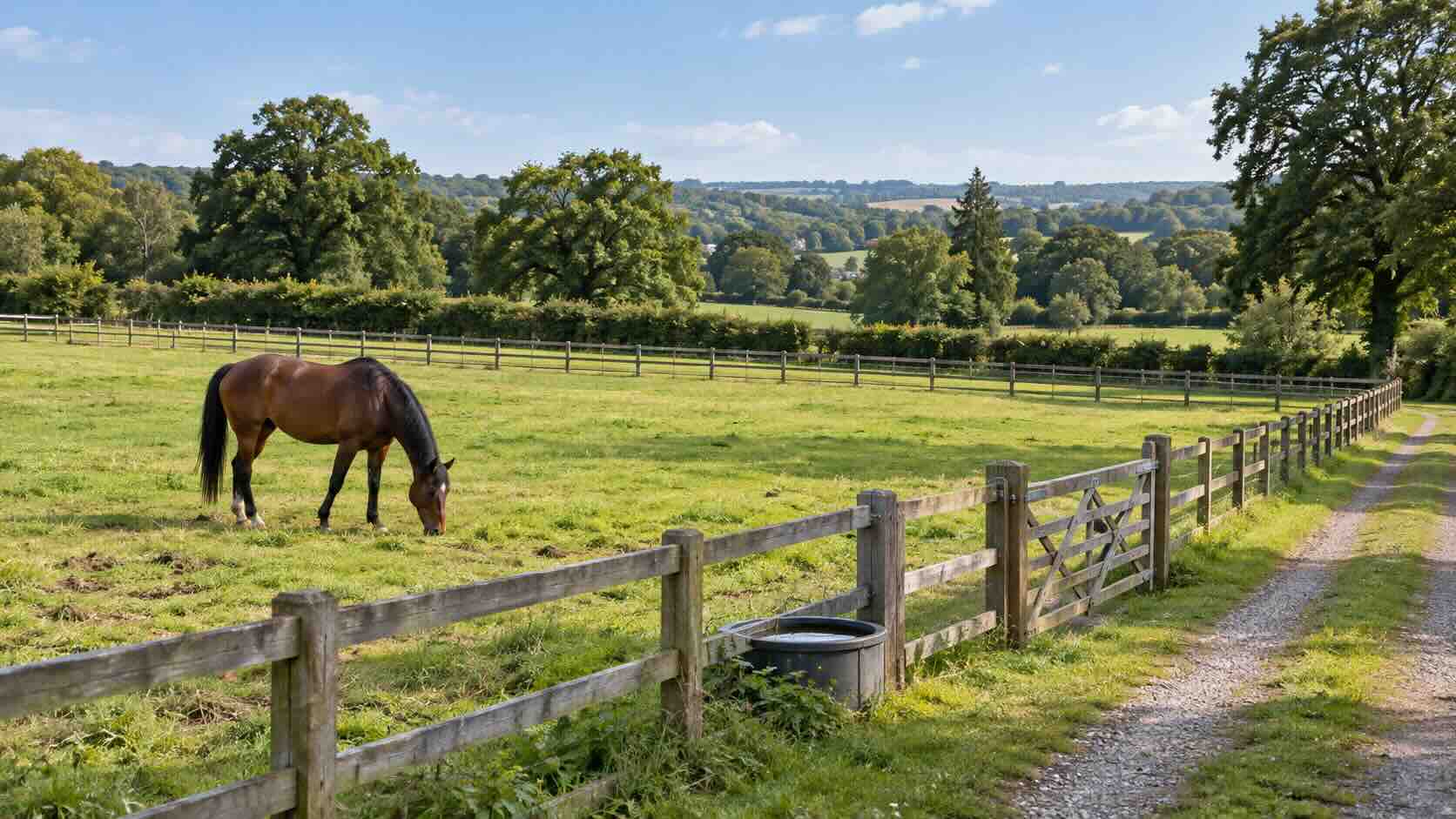
Assess usable grazing, rather than headline acreage
A property’s total acreage may include the house, garden, drive, woodland, steep ground and areas that contribute little to the grazing you need. With equine property, I want to establish what land is available to the horses, how it is arranged and whether it suits your management plans.
Soil, drainage, slope, existing condition and seasonal use all affect the assessment. A paddock that looks inviting in dry weather may create a different routine in winter. Ask about previous use, maintenance and areas that become difficult after rain, and seek experienced advice where the land’s suitability is uncertain.
I would look at:
- Layout: whether paddocks can be used and rested in a way that suits your horses and management approach.
- Access: how horses, people and machinery move between the yard and fields.
- Boundaries: the condition and suitability of fencing, gates and any shared responsibilities.
- Water: the supply, its reliability and how each turnout area is served.
- Ownership: whether all the land shown is included in the sale, or whether some is rented or used by agreement.
The British Horse Society’s pasture management guidance provides useful context. A simple acreage-per-horse rule cannot answer every property’s grazing question.
Gateways, routes to the stables and winter turnout arrangements deserve particular attention. The BHS also offers guidance on mud management. Before assuming drainage improvements will solve a problem, establish what work is practical, permitted and likely to cost.
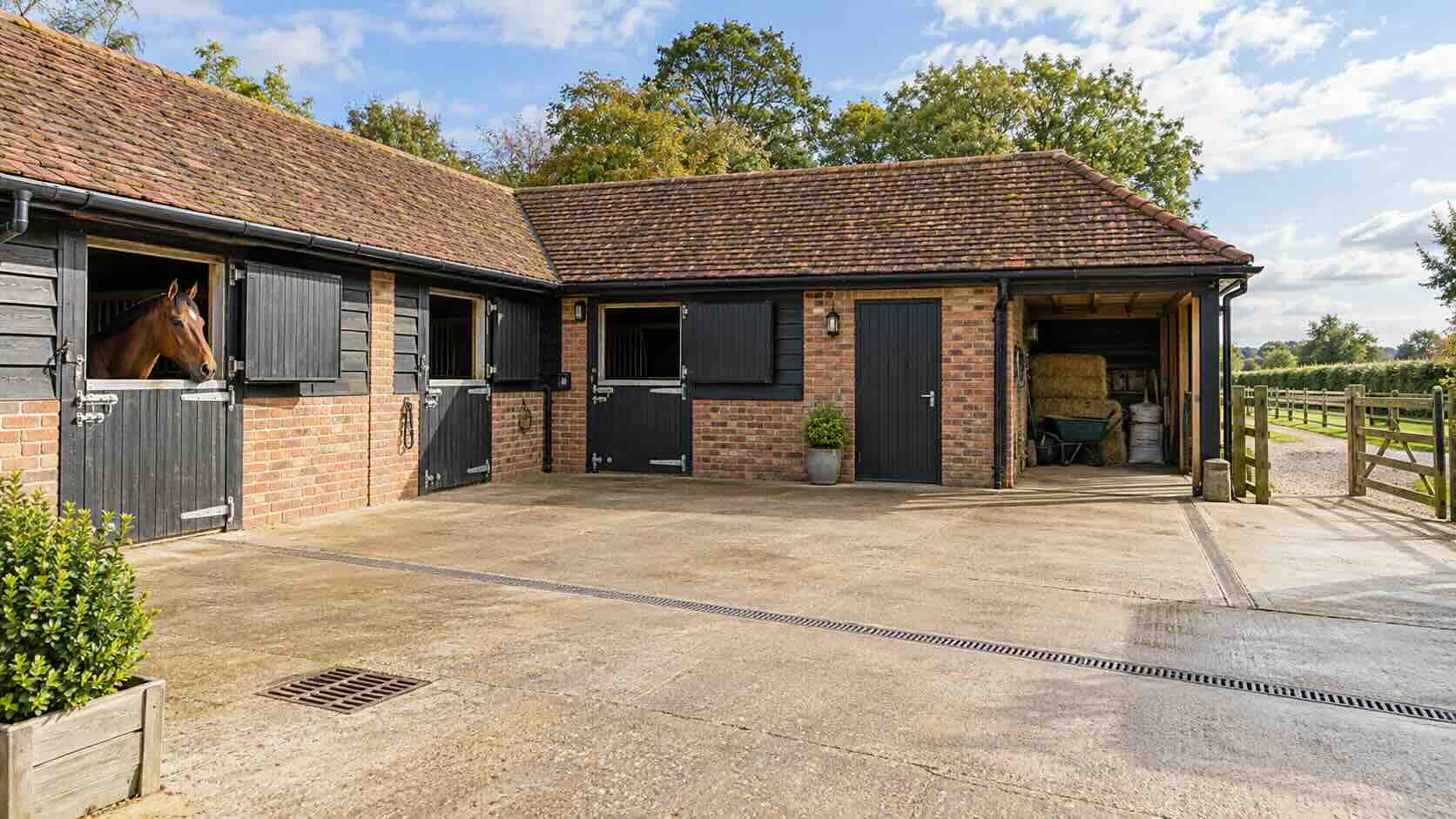
Look at how the stables and yard work together
The number of boxes is only the beginning. An equine property with attractive buildings may still need changes to work comfortably and safely for your horses.
Consider stable dimensions and design against the animals that will use them, together with ventilation, light, flooring, drainage and opportunities for appropriate social contact. The BHS stable safety guidance is a useful reference when assessing the existing arrangement.
I would also examine the less prominent parts of the yard: secure tack storage, feed and bedding space, water, washing facilities, lighting and the route to the muck heap. Deliveries and manure removal need to work without disrupting the house or creating awkward movements around horses.
Walk the route you would use in the dark and in poor weather. The distance between the house, stables and paddocks can make a considerable difference to everyday work.
Where buildings need repair or adaptation, suitable professional inspections and quotations help establish the commitment before you buy.

An arena needs more than a good first impression
If an arena matters to your riding, assess its size, shape and position against what you intend to do. A facility suited to one owner’s routine may not suit yours.
Ask about the surface, construction, drainage, maintenance history and performance after prolonged rain or dry weather. Find out what equipment and ongoing work are needed to keep it in suitable condition. A specialist assessment may be worthwhile where construction, condition or refurbishment costs are unclear.
Also consider the route from the stables, nearby activity, shelter and any lighting arrangements. Your solicitor and planning adviser should establish the permissions and conditions relevant to its use, rather than relying on the fact that it is already there.
If you intend to add an arena, investigate the proposal before treating it as part of the property’s appeal. Space on a plan does not establish that the project is feasible.
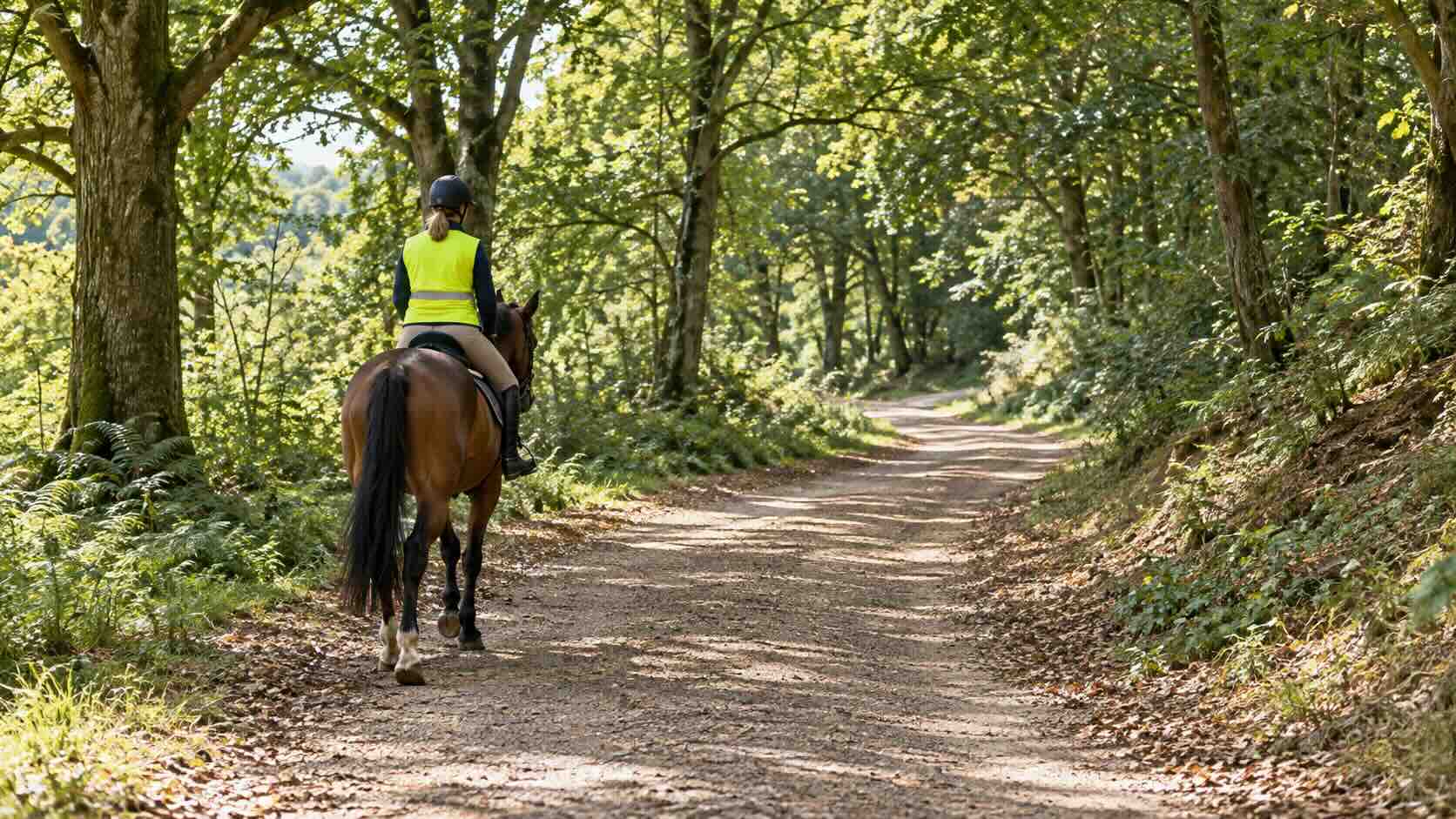
Check riding access from the actual gate
Good riding out can be one of the most valuable features of equine property. The useful question is what happens when you leave the yard: whether you reach a suitable route directly, need to cross a road or must travel along a busy stretch first.
Follow the proposed route and consider gates, surfaces, road crossings and the types of users you may encounter. What works for a confident rider and experienced horse may be unsuitable for a child or a less settled combination.
Public footpaths, bridleways and private or permissive routes have different access arrangements. Surrey County Council’s countryside map helps with initial exploration, but the council states that it is not a definitive legal document.
For a route that is important to the purchase, ask your solicitor to verify the relevant rights and any permission on which access depends. The council explains the legal record of public rights of way. Establish the route’s practical condition as well as its recorded status.
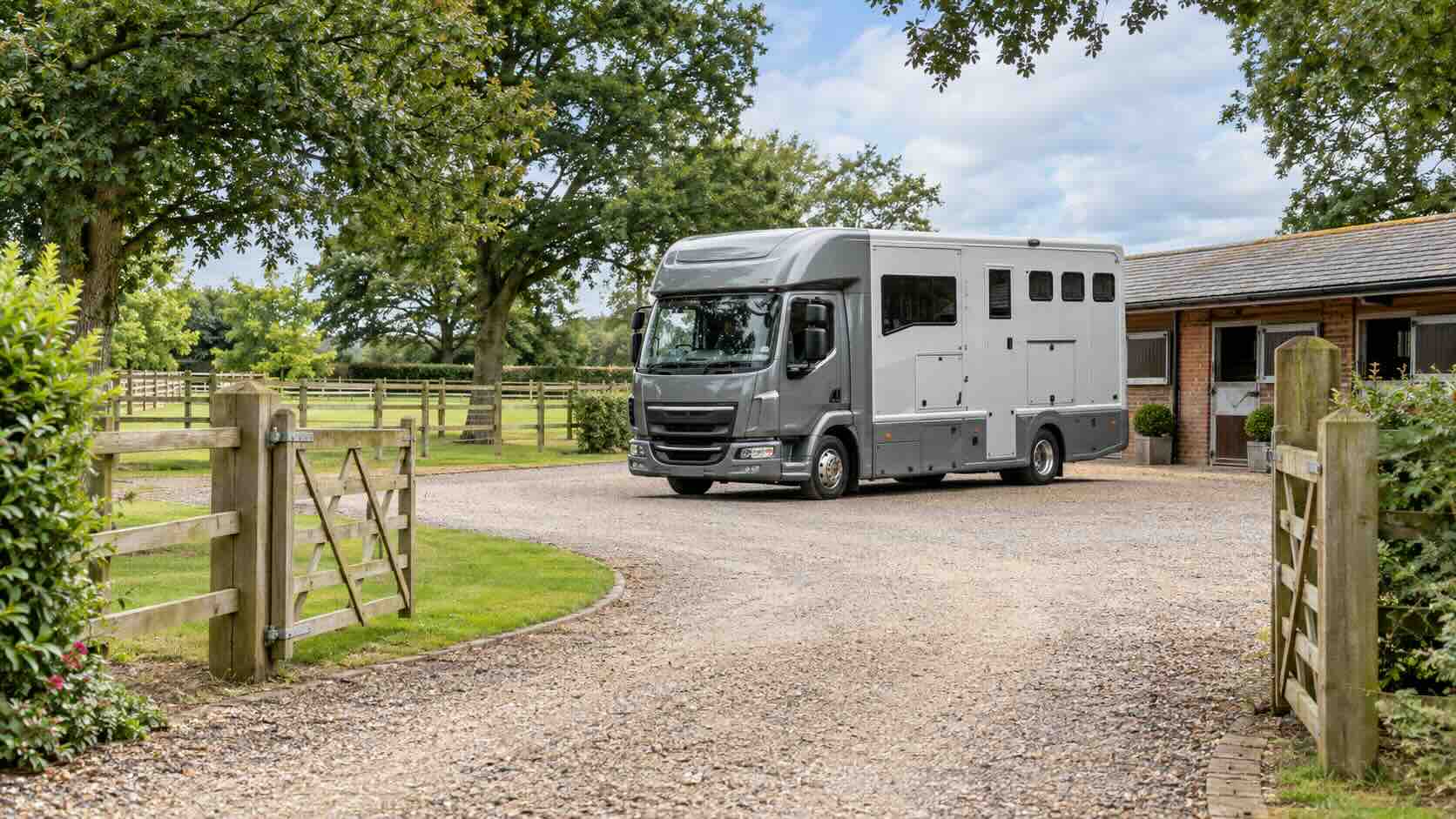
Test horsebox access and the services you will need
A driveway that is comfortable in a car may be awkward with a horsebox or trailer. Check the approach roads, entrance width, bends, gradients, overhead clearance, turning space and parking against the vehicle you actually use.
Consider where deliveries will arrive and where visiting vets, farriers and anyone helping at the yard can work. If access is shared, establish the rights, restrictions and maintenance arrangements with your solicitor.
Training venues, competition facilities and other equestrian services may influence the area. Verify the journeys, availability and suitability of the places you expect to use, rather than assuming that a strong local horse community will meet every requirement.
For regular competition travel, the journey from the yard to the main road can matter almost as much as the onward route. A particularly secluded property may bring compromises that need to be understood before you commit.

The house must suit the whole household
It is easy for the facilities to dominate an equine property search. The house still needs to offer the accommodation, privacy and everyday convenience that make it a comfortable home.
I would consider living space, visiting family, working from home and how the garden relates to the yard. Being able to see the stables may be reassuring. You may also want a separate part of the grounds where family life can happen away from deliveries, machinery and the daily work around horses.
A boot room, utility space and practical entrance can be especially useful. So can a layout that separates wet clothes and equipment from the main reception rooms.
School choices, the commute, shops and friendships remain part of the decision. Our schools and commuting guide explores those wider priorities. The strongest shortlist will work for the people who do not ride as well as those who do.
Investigate planning, title and permitted use
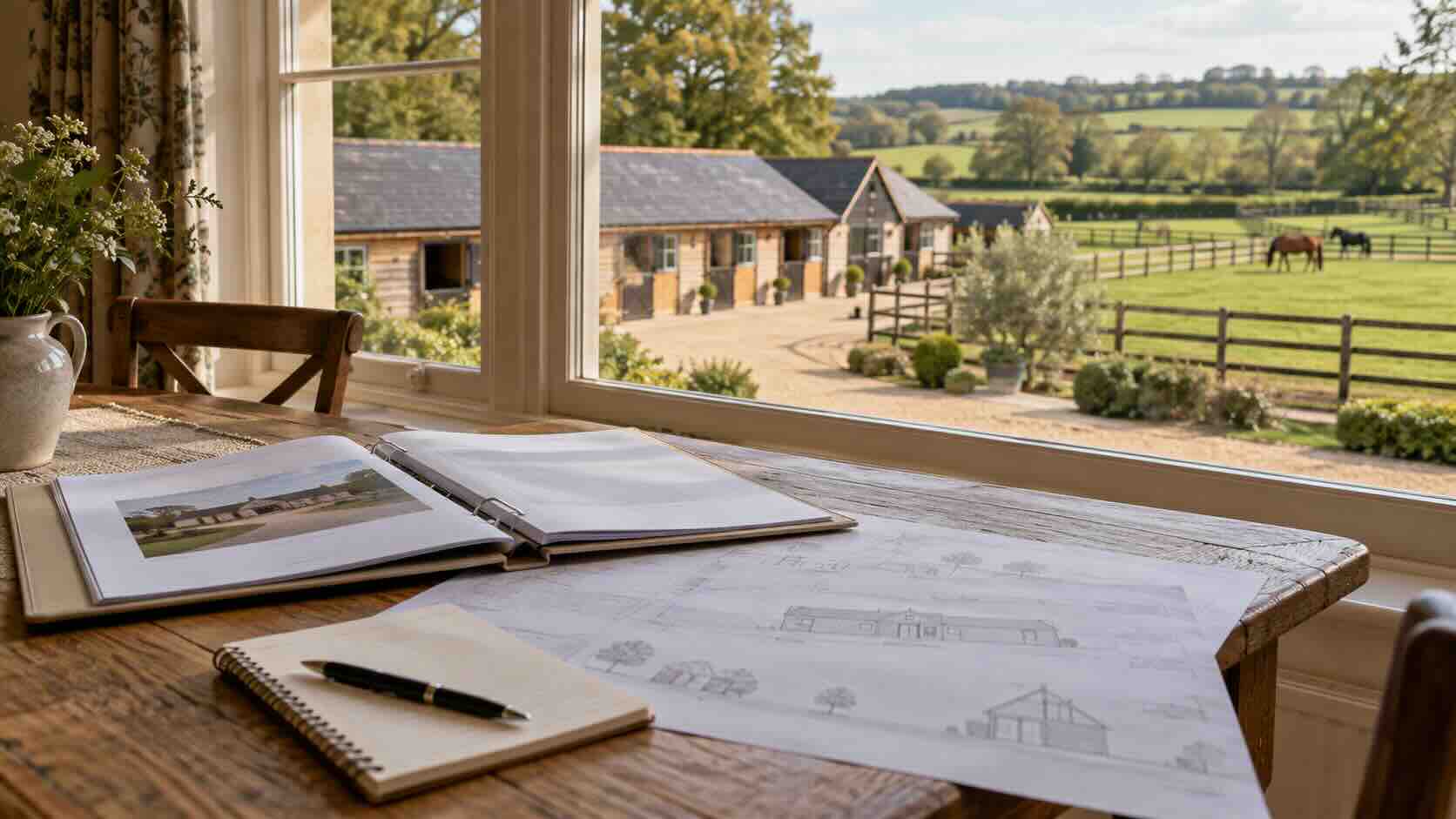
Before buying equine property, establish that the existing arrangements and your intended use have been properly investigated. Buildings, arenas, land use, access and any accommodation associated with the yard can raise different questions.
Through our property due diligence, we help identify matters for the solicitor, rural surveyor, planning consultant and other relevant specialists. Depending on the property, these may include:
- Planning history, existing permissions and conditions affecting the house, stables, arena, lighting or use of the land.
- Title boundaries, access rights, covenants, easements and responsibilities for shared roads or services.
- Any land occupied by another person, grazing arrangements or agreements that need resolving before you take possession.
- Restrictions affecting buildings, trees, landscape or proposed alterations, including relevant protected designations.
- Water, drainage, utilities, waste arrangements and any specialist investigations the property requires.
- Whether proposed additional accommodation or changes to existing buildings can lawfully serve the purpose you intend.
If your plans include livery, teaching, training or another business activity, make that clear from the outset. The commercial arrangements, permitted use and operating requirements need their own assessment alongside the purchase of the home. Government guidance on keeping horses commercially provides an initial reference, with property-specific professional advice needed for your plans.
Where a purchase depends on creating or changing facilities, I want the relevant questions explored before the decision rests on an assumption about what might be possible.
Assess the purchase price and the cost of ownership
Two equine properties with similar acreage can offer very different value. The quality and arrangement of the land, facilities, house, access and riding opportunities all influence the comparison.
I consider relevant sale evidence alongside what is available and the cost of making a property suitable. An established yard that works for you may justify a different decision from a less expensive property needing substantial changes.
Allow for ongoing maintenance as well as initial improvements: fencing, roofs, arena upkeep, tracks, machinery, water, utilities and the management of the land. If you will need regular help, include that in the assessment too.
The purchase costs and tax position deserve specialist advice, particularly where a property includes different uses or a business. As part of our wider assessment, we also consider the potential relevance of the mansion tax position where applicable.
A property’s appeal becomes easier to judge when the purchase, necessary work and likely ongoing commitments are considered together.
How Rowallan approaches an equine property search
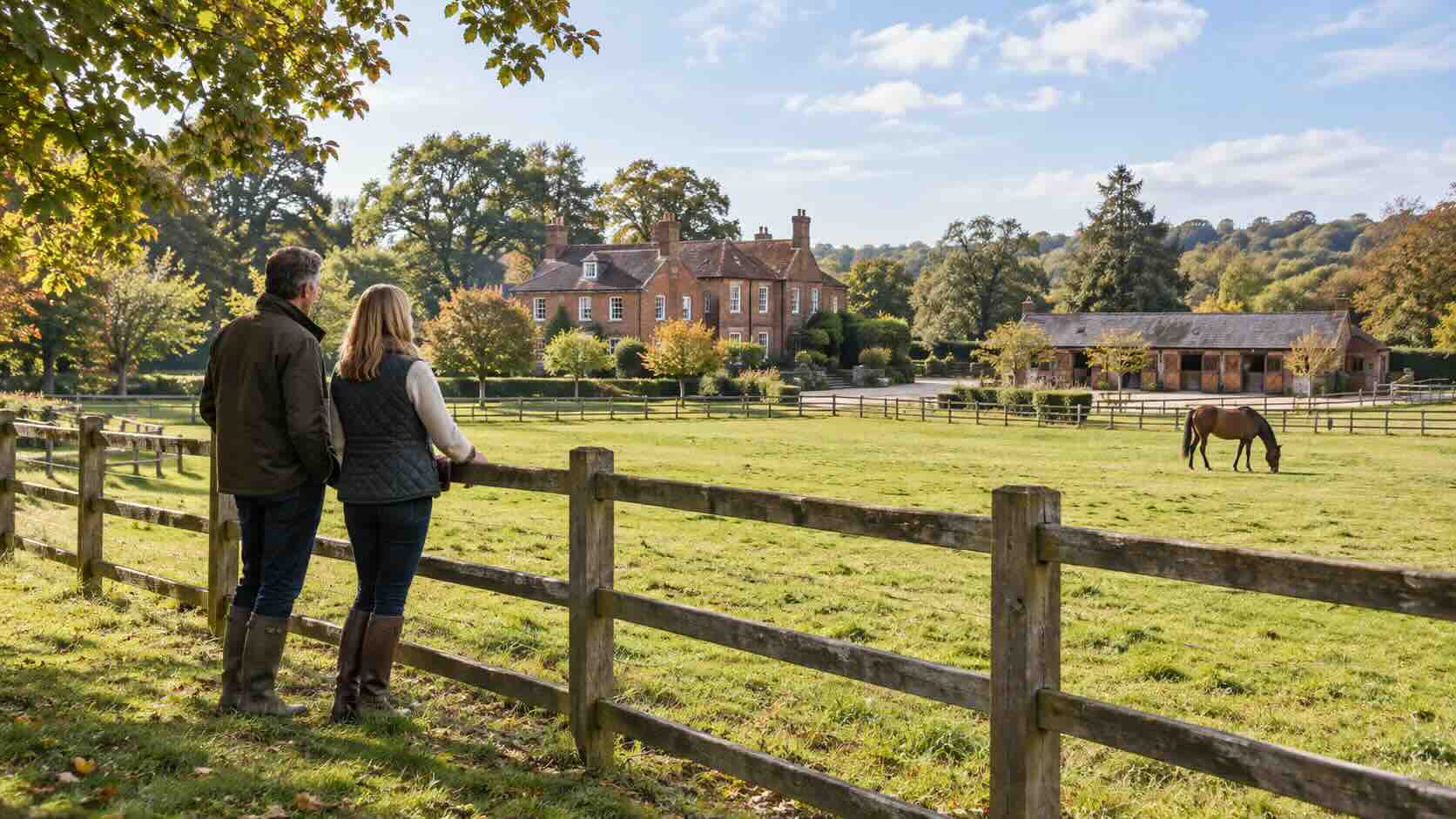
We represent the buyer. We handle the search, previewing, negotiations and coordination of the purchase, bringing in appropriate rural or equestrian expertise when a question calls for it. Our equestrian property buying service and support network explain the wider help available.
The search includes suitable advertised properties and opportunities being discussed privately. Relationships with local and national selling agents, rural contacts and other professionals can help us hear about a possible sale. A privately available equine property still needs the same assessment of suitability, value and condition.
When previewing, I want to understand the house, yard and land together. Photographs, video and a clear report help explain the compromises and identify which properties deserve a visit or further investigation.
Negotiations should reflect what we have learned, including the condition of facilities, necessary work, ownership arrangements and the seller’s circumstances. After an offer is accepted, we stay involved alongside your solicitor, surveyor and other advisers, following up the matters that need resolving.
Specialist introductions are based on the expertise the instruction needs. We do not receive commissions from businesses we recommend to clients, and you are free to appoint your own advisers.
Discuss your equine property search
You may have a clear equestrian brief or be considering whether keeping horses at home would suit your family. You may already have found a house and want help assessing the land and facilities alongside the purchase.
My starting point is understanding how you want to live and ride, the arrangements you have now and the changes you hope to make. From there, we can establish the search area, the practical requirements and where specialist advice would be useful.
Contact Jason Corbett to discuss equine property in the Surrey Hills and surrounding countryside. If a property has already caught your attention, our property advice and assistance can also help you decide how to proceed.